Floral Decorative Line Art Design: A Versatile Digital Asset for Creators
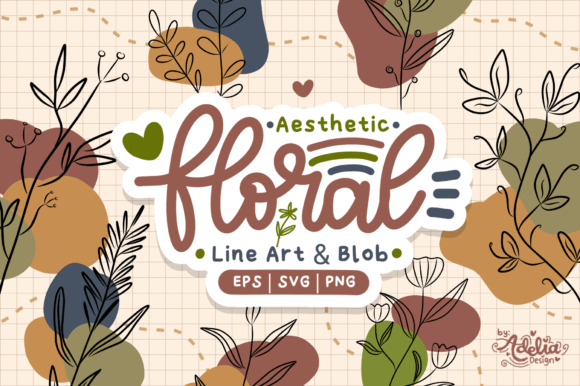
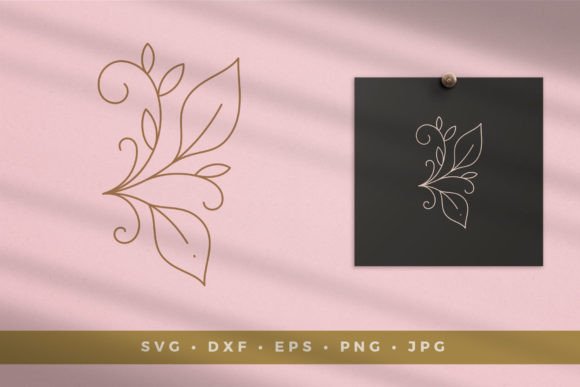
Floral decorative line art design represents a specific and popular category within digital graphic resources. It is characterized by continuous, elegant outlines that form floral motifs—such as roses, leaves, vines, or abstract blossoms—without filled colors or complex shading. This minimalist approach focuses on form and contour, resulting in clean, scalable artwork. What makes this style distinct is its balance between organic, natural inspiration and a structured, graphic execution. Unlike photographic floral images or heavily textured illustrations, floral line art relies on the power of silhouette and negative space, offering a different kind of visual utility.
Understanding the Core Formats and Their Utility
A key aspect of evaluating a digital floral decorative line art design bundle is understanding the included file formats. Each format serves a different purpose and works with specific tools, which influences its suitability for various projects.
The SVG (Scalable Vector Graphic) file is arguably the most versatile for many creators. Because it is a vector format, it can be resized infinitely without any loss of quality. This makes it ideal for applications where scale is variable, such as logo integration, large format prints, or detailed engraving work. The DXF (Drawing Exchange Format) file is similarly vector-based but is historically geared more towards computer-aided design (CAD) software, like some versions of AutoCAD or for certain vinyl cutting machine applications. It can be a critical inclusion for users in fabrication or sign-making.
The EPS (Encapsulated PostScript) file is another veteran vector format with broad compatibility across professional design software like Adobe Illustrator and CorelDRAW. It often serves as a reliable backup or alternative to SVG for print design workflows. The raster files, PNG with a transparent background and JPEG, fulfill different needs. The transparent PNG is immediately usable for digital compositing—placing the design onto website banners, digital invitations, or mock-ups without a white box background. The JPEG, while lacking transparency, is a universally readable image file suitable for quick placement in documents or basic digital projects.
Comparing Line Art with Other Floral Design Styles
When researching floral imagery for a project, you’ll encounter several styles beyond decorative line art. Understanding these alternatives helps identify the best fit for your specific needs.
Watercolor floral illustrations offer soft blends, textured brush strokes, and a painterly feel. They excel in projects aiming for a warm, organic, and handcrafted aesthetic, such as wedding stationery or boutique branding. However, their detailed color and texture can sometimes complicate extraction or overlaying on busy backgrounds. Photorealistic floral images provide literal detail and color accuracy, perfect for projects requiring authenticity, like a botanical guide or a product showcasing actual flowers. Their fixed resolution and often complex backgrounds can limit flexibility for custom manipulation.
Floral decorative line art design sits between these. It lacks the color emotion of watercolor or the realism of photography, but it gains immense flexibility and editorial clarity. Its strength is in its role as a graphic element rather than a standalone illustration. It can be layered, colored, textured, or combined by the user because its simple outline is like a blank canvas. This makes it a strong candidate for projects where the design needs to integrate seamlessly with other text or graphics, or where the end-user intends to apply their own color scheme.
Primary Use Cases and Best-Fit Scenarios
The listed applications—greeting cards, printable projects, t-shirts, typography quotes, paper craft, scrapbooking—highlight where floral decorative line art design often excels. For greeting cards and printable projects, the vector formats allow for crisp printing at any size, from a small card to a large poster. The transparent PNG is directly useful for digital card mock-ups. In t-shirt design, the SVG or DXF files are crucial for plotter cutting machines used in heat-transfer vinyl applications, ensuring sharp edges on the final garment.
When combined with typography quotes, the unassuming line art does not compete with the text; it complements it as a border, underline, or subtle background element, enhancing the message without overpowering it. For paper craft and scrapbooking, the ability to print and cut precise outlines, or to use the designs as templates, is a significant advantage. The line art can serve as an embroidery stencil, a laser cutting guide, or a sketch base for further artistic development.
Tradeoffs and Limitations to Consider
While versatile, floral decorative line art design is not a universal solution. Its minimalist nature is a tradeoff. If your project’s primary goal is to convey rich, specific emotional tone through color and texture—such as the warmth of a summer garden or the melancholy of autumn—a standalone line art file may feel insufficient without significant additional work from you to add those elements. You are essentially purchasing a structure, not a finished painting.
Furthermore, the value of the bundle is highly dependent on your software proficiency and tool access. If you do not own or use vector editing software (like Illustrator, Inkscape, or compatible cutting machine software), the SVG, DXF, and EPS files may have limited utility for you beyond being passed to a professional service. Your primary usable asset would then be the PNG and JPEG files. In such a case, comparing this bundle to a purchase of high-resolution, ready-to-use raster floral images might be a relevant consideration.
Decision Factors for Choosing This Resource
Several factors can point towards a floral decorative line art design digital download being the right choice. First is the need for scale flexibility. If you foresee using the same floral motif on a small business card and a large storefront window, the vector files are indispensable. Second is the intention for customization. Are you planning to color the flowers in specific brand colors, fill them with patterns, or animate the lines digitally? The clean outlines provide the perfect base layer.
A third factor is multi-platform application. Are you producing both physical products (like t-shirts) and digital content (like social media graphics)? This bundle, with its mix of vector and raster formats, supports that cross-media workflow better than a single format product. Finally, consider the project timeline. Line art can often simplify production. For a quick turnaround project, using a transparent PNG to drop onto a layout is faster than manually cutting out a complex floral photograph from its background.
Conversely, you might need another option if your project demands a fully realized, atmospheric illustration from the start, with no time or skill for customization. If your work solely resides in a digital video editing environment where you only need moving, colored floral assets, a stock video clip or an animated GIF might be a more efficient alternative. Similarly, if your craft exclusively uses pre-colored printable elements, a purchase of already-colored floral digital papers might suit you better.
Evaluating Quality and Compatibility in Context
Beyond style, the practical evaluation of any digital design bundle includes assessing the technical quality and compatibility of the files. A well-prepared floral decorative line art design set should have vector files with clean, continuous paths, not broken or overlapping lines that could cause issues in cutting machines. The raster files should be provided at a high resolution—typically 300 DPI or more for print-ready quality. The transparency in the PNG should be true alpha transparency, not a rough white mask.
Compatibility checks are also wise. While SVG is widely supported, some older versions of software or specific online platforms might handle EPS more reliably for print. It’s beneficial to know the common file types your primary tools accept. For instance, some home-use cutting machines might prefer SVG, while industrial ones might require DXF. Having multiple vector formats mitigates this risk.
In conclusion, floral decorative line art design bundles offer a specific kind of utility rooted in flexibility and foundational structure. They are powerful for creators who act as editors and customizers, who need a design to adapt across multiple mediums and scales. They are less optimal for those seeking a final, atmospheric artwork for immediate use with no modification. By comparing the inherent strengths of line art against other floral styles, and by honestly matching the file formats to your own tools and project requirements, you can make a more informed decision about whether this type of digital resource fits your current creative process.